Small Changes That Make Balcony Gardens Easier
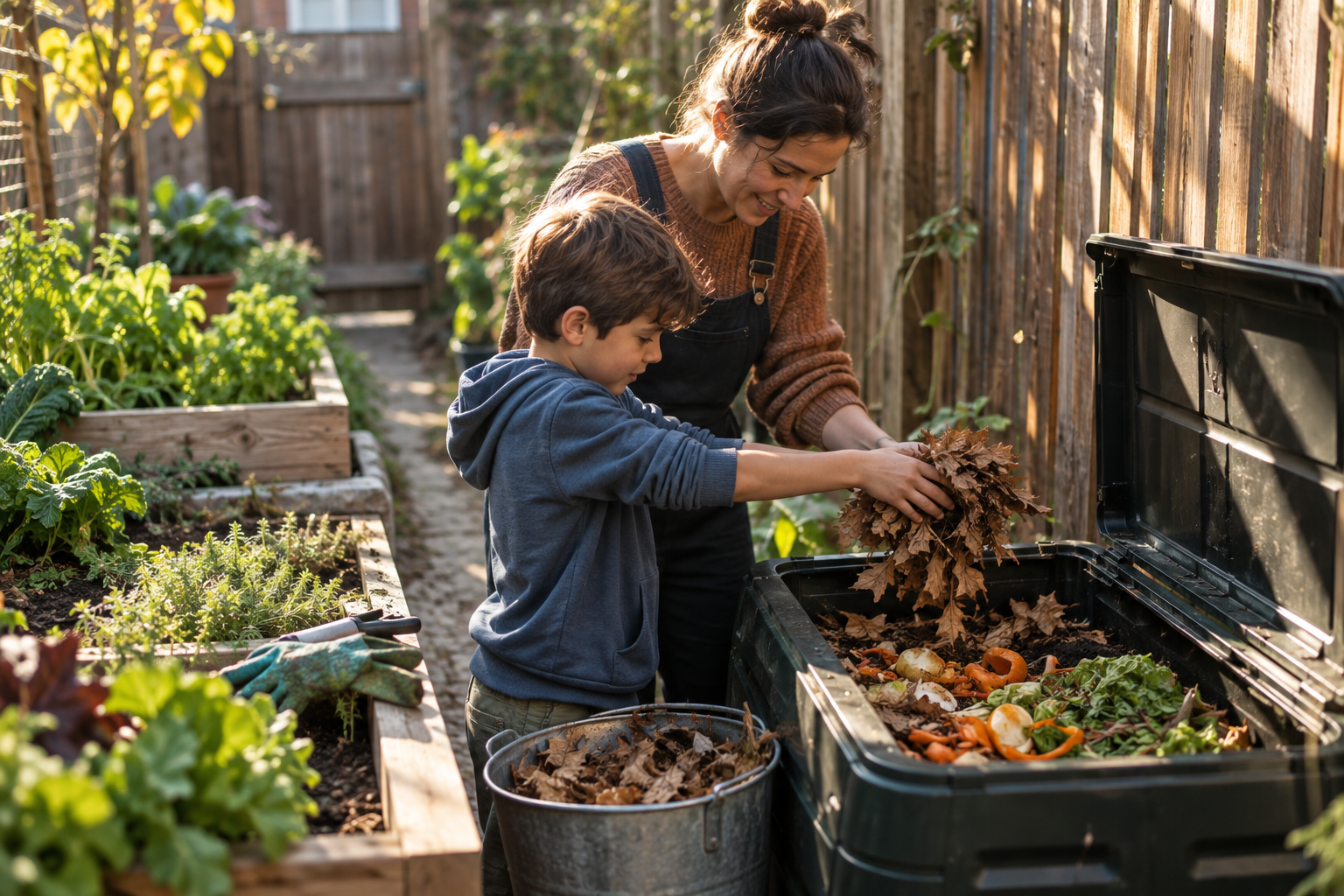
A balcony garden often starts with one cheerful herb and ends with an obstacle course. A few bargain pots become twelve. Water drips where you do not want it. Wind knocks over a plant. The chair no longer fits. Then you begin avoiding the very outdoor space you hoped would feel restorative. To make balcony gardens easier, think like a renter first and a gardener second: protect access, control weight and water, make every piece movable, and choose plants for the balcony’s actual conditions. You can make a noticeable reset in one weekend without drilling permanent hardware or replacing everything you own. The goal is not to cram in the most plants. It is to build a small garden you can water, clean, sit beside, and move when your lease or season changes.
Key takeaways
- Preserve a clear walking path and door swing before deciding where plants go.
- Use fewer, more stable containers and avoid loading one balcony edge without considering weight.
- Plan drainage and watering so neighbors, floors, and exterior walls stay protected.
- Treat wind and reflected heat as design conditions, not problems to solve after plants suffer.
- Build the garden from movable renter-friendly pieces you can rearrange or take with you.
In this article
- What small changes make balcony gardens easier for renters?
- Why weight, drainage, and wind should shape the layout first
- How to complete a renter-friendly balcony garden reset in one weekend
- What this looks like on three real rental balconies
- Frequently asked questions
- Your action checklist
- Final word: make balcony gardens easier by protecting function
What small changes make balcony gardens easier for renters?
To make balcony gardens easier, renters should start by clearing the floor, mapping the door and walking path, grouping plants by light and water needs, and replacing unstable clutter with a few movable zones. Keep drainage controlled, use lightweight but sturdy containers, and avoid permanent attachments unless your lease and building rules clearly allow them.
Begin with an empty-floor reset. Move every loose pot, chair, bag of soil, and tool indoors or to one side. Open the balcony door fully. Walk out carrying a watering can. Sit in the chair if you use one. Those motions reveal the space you must protect before plants return. A garden that blocks access will always feel harder than one with fewer plants and a clean route.
Next, create zones. Put the thirstiest plants near the easiest watering point. Use the brightest section for sun lovers. Place shade-tolerant plants where the building naturally protects them. Reserve the windiest corner for low, sturdy plants or leave it open. A slim movable shelf can use vertical space without attaching anything to the wall, but keep it stable and within any building restrictions.
- Clear the balcony floor and open the door to its full swing.
- Mark a comfortable path from the door to the railing or seating area.
- Group plants by sun exposure and watering needs.
- Return only containers that fit the planned zones.
- Store tools vertically or in one weather-safe bin instead of scattering them.
- Test the layout by watering every plant once before calling it finished.
Why weight, drainage, and wind should shape the layout first
Balconies are not ground-level patios. Before adding large containers, raised planters, stone pots, or heavy bags of wet soil, follow your building’s rules and any stated load restrictions. Wet potting mix weighs more than dry mix, and several heavy planters clustered in one area can add up quickly. Renters should favor containers that are appropriately sized but not unnecessarily massive, and should ask property management when the rules are unclear.
Water also needs a destination. Drainage holes are healthy for roots, but uncontrolled runoff can stain flooring or drip below. Use properly sized saucers or trays where appropriate, water slowly, and empty standing water rather than allowing roots to sit submerged. A small waterproof mat can help with routine messes, but it should not trap moisture against surfaces for long periods. Check corners after watering so you notice puddles before they become a neighbor or maintenance issue.
Wind deserves equal attention. High-rise balconies can funnel gusts that dry foliage and tip narrow containers. Lower, wider pots are generally more stable than tall top-heavy ones. Grouping containers can create some mutual shelter, while still leaving enough space for airflow. Soft ties can support stems on stakes, but do not attach planters or structures to railings unless your building specifically permits it. Falling objects are a serious hazard, so stability outranks aesthetics.
A balcony garden becomes easier the moment every pot has a safe place, every drop has a destination, and every path stays open.
How to complete a renter-friendly balcony garden reset in one weekend
On Saturday morning, inventory what you already own. Sort plants into keep, repot, relocate, and discard. Empty dead annuals and inspect reusable containers. If a plant has outgrown its pot, move it up only as much as needed rather than buying the largest container available. Clean saucers, check drainage holes, and remove broken items. This first pass often creates more usable space than buying new organizers.
Saturday afternoon is for layout. Put the largest stable containers down first, then seating, then smaller pots. Keep frequently harvested herbs within easy reach. If you use a free-standing shelf, place heavier pots on lower levels. Step inside and look back through the window; a little negative space makes the balcony feel intentional and also leaves room for maintenance.
On Sunday, solve the care routine. Group plants that dry at similar rates. Decide where your watering can lives. Add mulch to suitable containers to help moderate moisture loss, keeping material away from plant stems. Secure tall plants with supports. Finally, sweep the floor and water the whole garden. Watch where runoff travels, which pots wobble, and which plants are awkward to reach. Make those corrections before the weekend ends.
- Keep: healthy plants that suit the light and fit your routine.
- Relocate: plants fighting wind or receiving the wrong amount of sun.
- Repot: root-bound plants that genuinely need more space.
- Remove: broken containers, dead plants, duplicate tools, and unused décor.
What this looks like on three real rental balconies
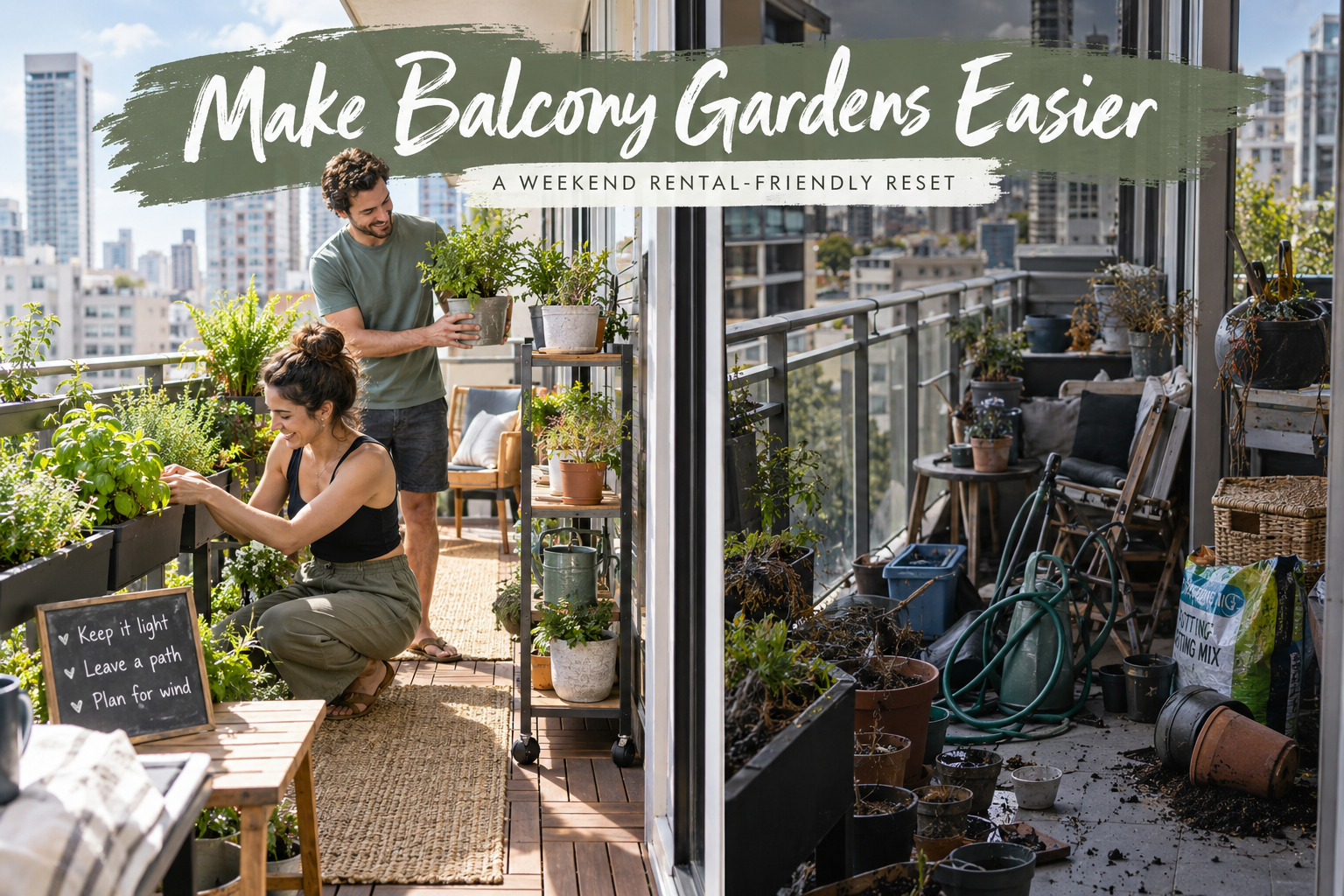
Jordan’s narrow fire-door balcony: Jordan loves flowers but had lined both sides with tiny pots. Watering meant turning sideways around containers. During the reset, Jordan keeps one side mostly clear, moves the healthiest flowers into three larger grouped containers, and stores tools in a single lidded box. The balcony holds fewer pots but looks fuller because the plants are grouped instead of scattered.
Priya’s hot south-facing balcony: Priya’s space receives intense afternoon sun reflected from nearby walls. She had been buying more water-hungry plants every spring and watching them struggle. She shifts to heat-tolerant herbs and flowers suited to the exposure, uses slightly larger containers for moisture buffering, and moves delicate greens to the part of the balcony that receives earlier shade. Her main improvement is not a gadget; it is matching plants to the microclimate.
Evan and Luis’s windy upper floor: Their tall decorative pots looked elegant but tipped during gusts. They switch to lower, wider containers and keep heavier pots on the floor rather than a shelf. They use removable supports for a compact tomato and stop placing loose décor near the railing. The space feels calmer because they no longer rush outside whenever the wind picks up.
Frequently asked questions
How many plants should I put on a small balcony?
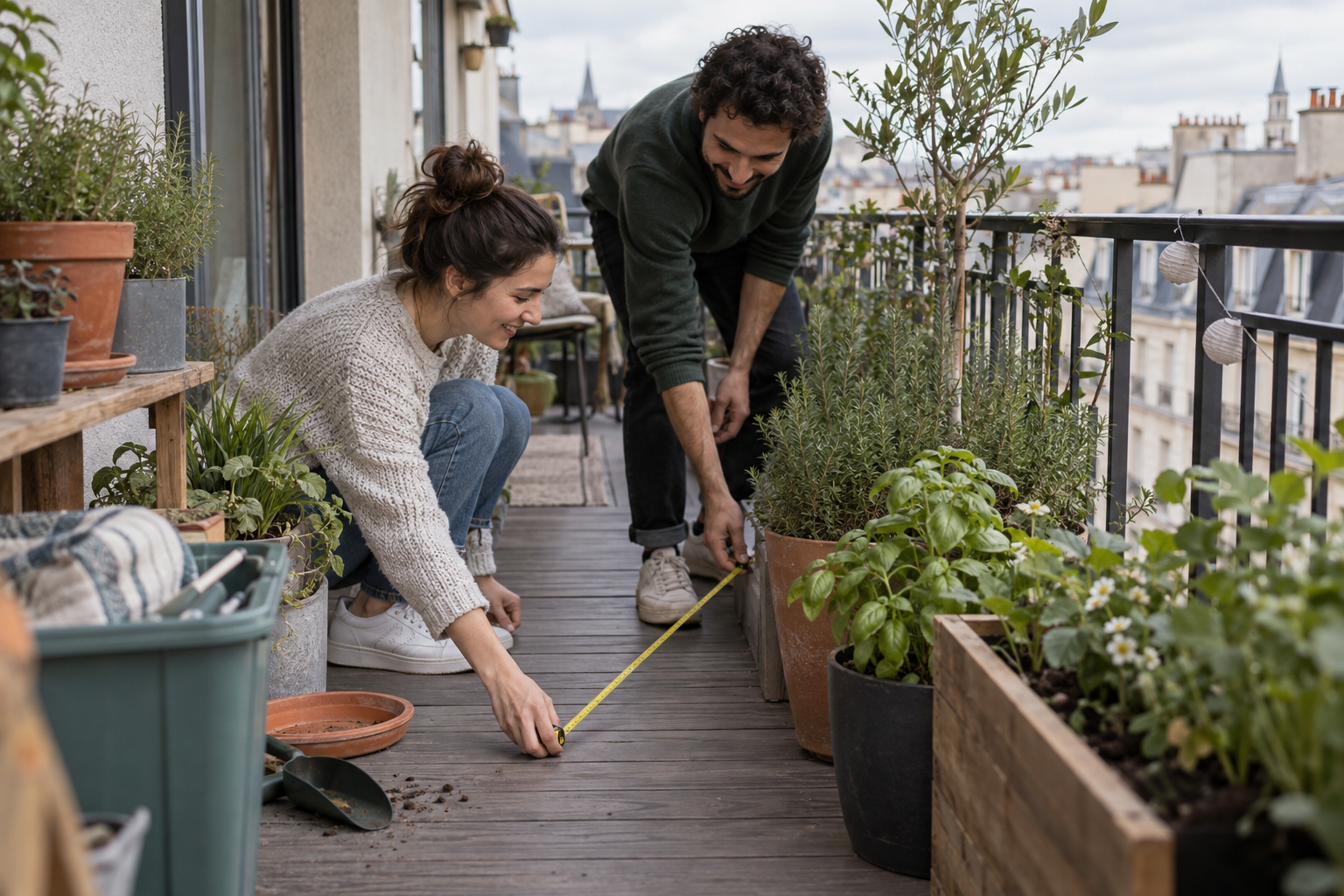
There is no universal number. Start with the usable floor area, required walking path, door clearance, building rules, and how many containers you can water consistently. A smaller number of healthy, well-placed plants usually feels more abundant than many struggling pots scattered across every surface.
How do I stop balcony pots from drying out so fast?
Use adequately sized containers, group compatible plants, choose species suited to the exposure, and check whether strong wind or reflected heat is accelerating moisture loss. Mulch can help suitable pots retain moisture. Avoid solving rapid drying only by watering more if the plant itself is poorly matched to the site.
What is the safest way to handle drainage on a balcony?
Use containers with proper drainage plus saucers or trays where needed to control runoff. Water slowly so the mix absorbs moisture instead of immediately overflowing, then empty standing water when appropriate. Follow building rules and make sure no water or loose material can create problems for neighbors below.
Can renters use vertical gardening on a balcony?
Yes, but the safest renter-friendly options are usually free-standing and movable rather than drilled into exterior walls. Keep heavier containers low, make sure shelves cannot tip, and confirm your lease or building rules before attaching anything to walls or railings.
What should I do about strong balcony wind?
Choose low, stable containers, avoid loose décor, support tall stems, and place sensitive plants in the most sheltered available area. Grouping pots can help reduce exposure, but safety comes first. Do not rely on unapproved railing attachments to secure heavy planters or structures.
Your action checklist
- Clear the floor and test the full door swing.
- Protect one comfortable walking and watering path.
- Group plants by light, water demand, and wind exposure.
- Replace unstable or broken containers before adding anything new.
- Control runoff with suitable drainage and trays.
- Move heavy pots low and keep free-standing shelves stable.
- Store tools in one compact weather-safe place.
- Water the finished layout once and fix any awkward spots.
Final word: make balcony gardens easier by protecting function
You make balcony gardens easier by protecting the things that let the space work: access, stability, drainage, sunlight, and a care routine you can repeat. Renters do not need permanent construction to create a beautiful outdoor corner. In fact, movable pieces often make the garden more adaptable as seasons, leases, and plant needs change. This weekend, start by clearing the floor and rebuilding the layout from the path outward. When every pot earns its place, the balcony stops feeling like storage and starts feeling like a garden again.